PCRTC

LIVE WEBINAR PROGRAMMES WITH INTERACTIVE eLEARNING

Primary Care Respiratory & Diabetes Training Programme 2026/7

Choose from Adult Asthma, Paediatric Asthma, COPD and Type 2 Diabetes programmes, delivered through live monthly webinars supported by comprehensive interactive eLearning.

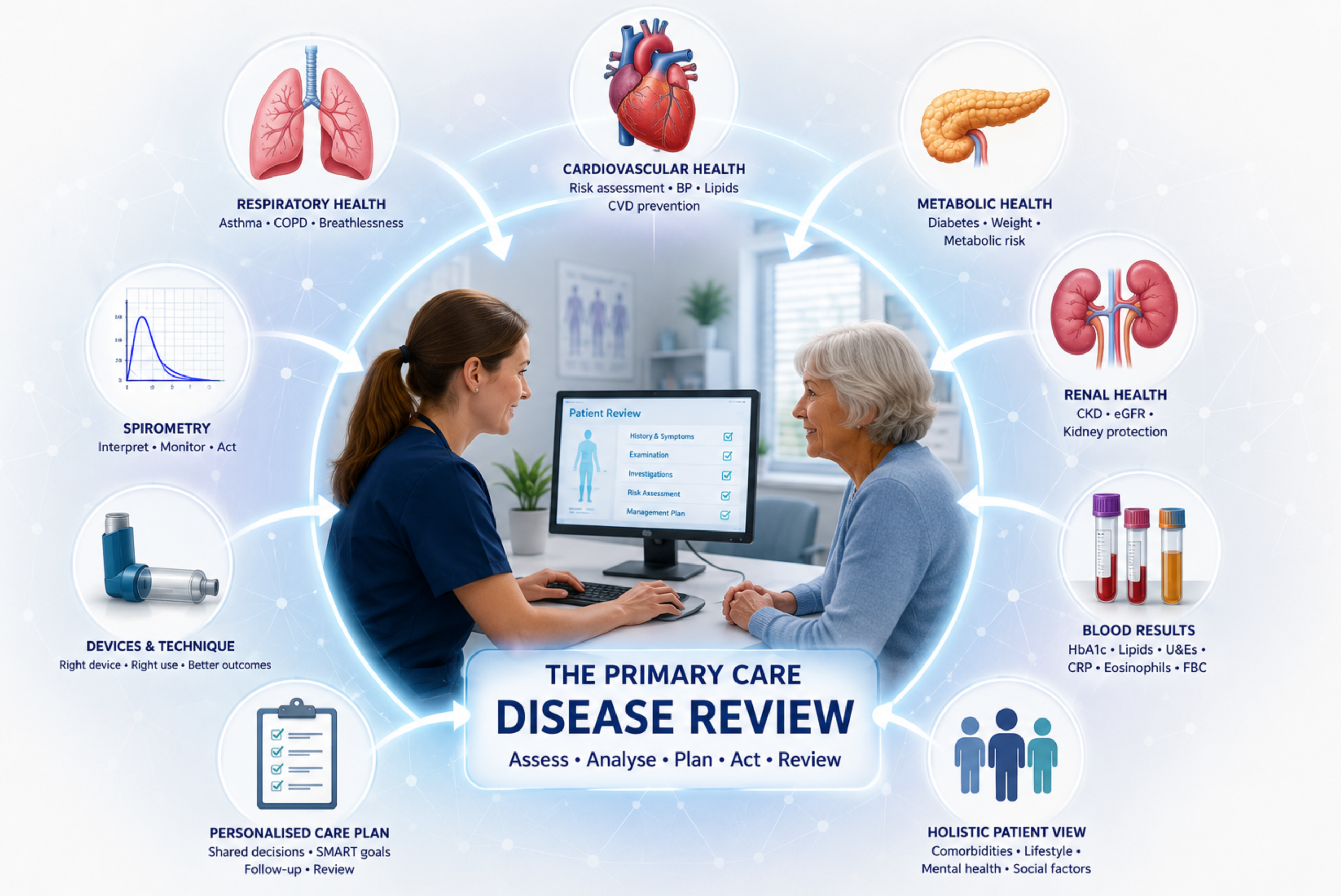
Illustration showing a primary care clinician carrying out a patient disease review, integrating respiratory, cardiovascular, renal and metabolic assessment to develop an evidence-based management plan.

Education Designed for Real-World General Practice

Traditional university courses are designed to provide an in-depth understanding of a single disease area.

Primary care is different.

General practice clinicians manage patients with asthma, COPD, diabetes and multiple long-term conditions every day. 

They need education that reflects the realities of modern clinical practice—not months of study focused on topics they may rarely encounter.

Our programmes are built around the consultation.

Rather than teaching disease for the sake of disease, we teach clinicians how to carry out evidence-based annual and follow-up reviews, interpret their findings and develop patient-specific management plans that can be applied immediately in practice.

Every topic we include has one purpose:

Helping clinicians deliver better patient reviews.

We deliberately focus on the knowledge, reasoning and decision-making required in primary care, exploring each concept in depth before applying it to realistic case studies that mirror everyday consultations.

The result is education with the academic depth of the former diploma-level programmes, but designed specifically for clinicians working in general practice.
 

Paediatric Asthma Course

Delivered across four modules, providing comprehensive coverage from foundational physiology through to management and complication prevention.

Type 2 Diabetes Course

Delivered across four modules, providing comprehensive coverage from foundational physiology through to management and complication prevention.

Adult Asthma Course

Delivered in two modules, supporting confident interpretation of renal function, staging, risk assessment and guideline-aligned management.

Heart Failure Course

Delivered across four modules, providing comprehensive coverage from foundational physiology through to management and complication prevention.

COPD Course

Delivered in two structured modules, focusing on pathophysiology, diagnosis, pharmacological optimisation and long-term management in primary care.

CKD Course

Delivered across four modules, providing comprehensive coverage from foundational physiology through to management and complication prevention.
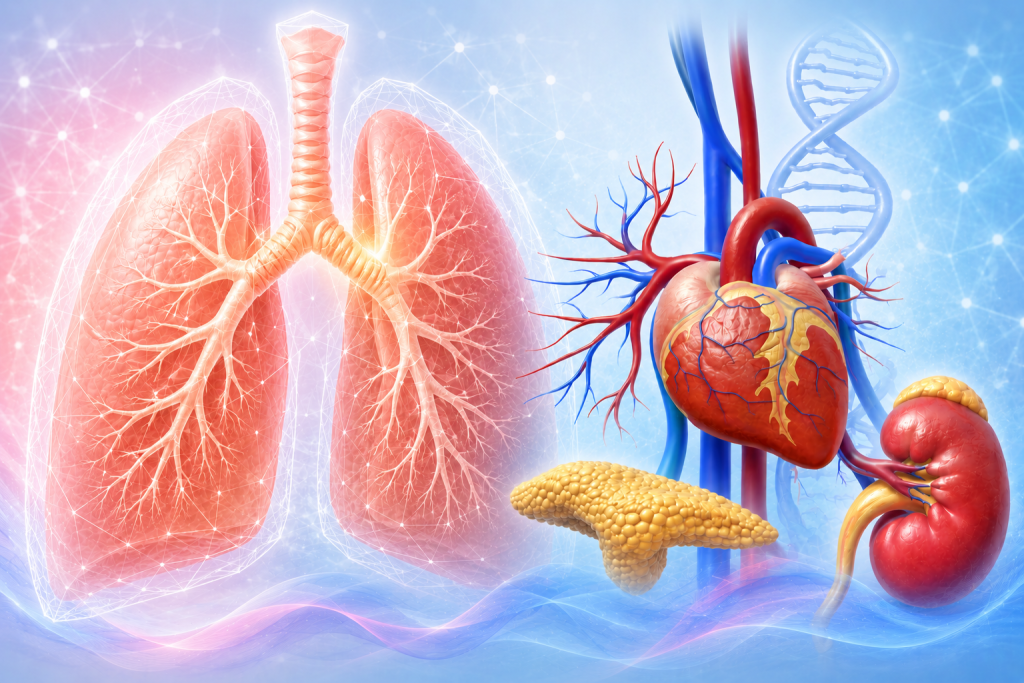
Illustration representing respiratory and diabetes education, featuring lungs, heart, pancreas, kidney and DNA on a blue scientific background.
all programmes are cpd accredited

A Structured Evidence-Based Educational Framework:

Every course is organised around a consistent educational pathway:

Normal Structure and Function:

Understanding normal physiology is the foundation of safe, effective clinical decision-making.

Disease Aetiology and Pathophysiology:

Exploring the mechanisms that drive disease progression and long-term risk.

Clinical Presentation and Diagnosis:

Recognising patterns, interpreting investigations, and applying current diagnostic criteria.

Assessment and Risk Stratification:

Identifying complications, co-morbidities, and risk in primary care settings.

Management and Optimisation:

Evidence-based pharmacological and non-pharmacological strategies aligned to current national guidance.


Integrated Long-Term Condition Management

Built for the complexity of modern day primary care.

These programmes are not single-condition updates delivered in isolation.  They are designed to support integrated, risk-based management across interconnected long-term conditions – reflecting the complexity seen in every day primary care.  Through structured live teaching and in-depth eLearning, we build the knowledge, clinical reasoning and confidence required to deliver safer, holistic care.